








Tanning beds indeed come with remarkable benefits, however, is it good for your skin?
Good quality tanning beds implemented with red light therapy come with many health benefits. However, to get the best outcomes, you need to ensure the dosage is kept at a good limit.
Want to know more? Let’s check out then!

| How Tanning Is Good For Skin? – Quick Answer Vitamin D productionImproving certain skin diseases or conditionsBetter moodReduced skin cancer chances |
Table of Contents
How Tanning Is Good For Your Skin? – Top 5 Benefits
Tanning brings several benefits to your skin. Also, using tanning beds to the recommended dosage would give you several benefits of red light therapy.
Increased Production of Vitamin D
Tanning helps your skin by increasing its vitamin D production. When the UVB rays of sunlight penetrate the skin, the semisterol (a form of a cholesterol derivative) undergoes a chemical reaction in your skin cells to produce vitamin D.
This helps with your:
- Bone health
- Immune function
- Maintenance of healthy skin barrier function
Improved Skin Conditions
Moderate UV radiation exposure can also lead to certain skin conditions. For instance, UV light is also used as phototherapy against certain conditions like psoriasis, eczema, and vitiligo.
In the case of psoriasis, UVB slows the fast growth rate of the skin cells; it eases inflammation in eczema and develops pigmentation in vitiligo.
Less Stress And A Better Mood
Tanning is an excellent way to get sufficient sunlight for better and improved mood with mental health. Sunlight stimulates endorphins, which are neurotransmitters in the brain that relieve stress and give a clear head and a good mood.
Reduces The Risk Of Skin Cancer

Although excessive UV exposure is linked to skin cancers, moderate responsible tanning might reduce that risk for specific types of skin cancer.
Several studies have indicated that adequate levels of vitamin D—obtained from regular moderate sun exposure. They are associated with a reduced risk of both melanoma and non-melanoma types of skin cancer.
Furthermore, UV will stimulate melanin production in the skin, thus offering some innate degree of protection against damage by UV.
Improved Aesthetics and Self-Esteem
Tanning enhances the skin with a healthy glow when combined with sunbathing. This would be a great way to build self-esteem or confidence at social places or during the summer months when your skin is more exposed.
Have a Look at These Reddit Threads and See What These People Have to Say
Skin looks better after tanning. Whats the deal? : r/SkincareAddiction
Any real or perceived “health benefits” of tanning never outweigh the risk. : r/unpopularopinion
Tanning just for mood and destress from work?
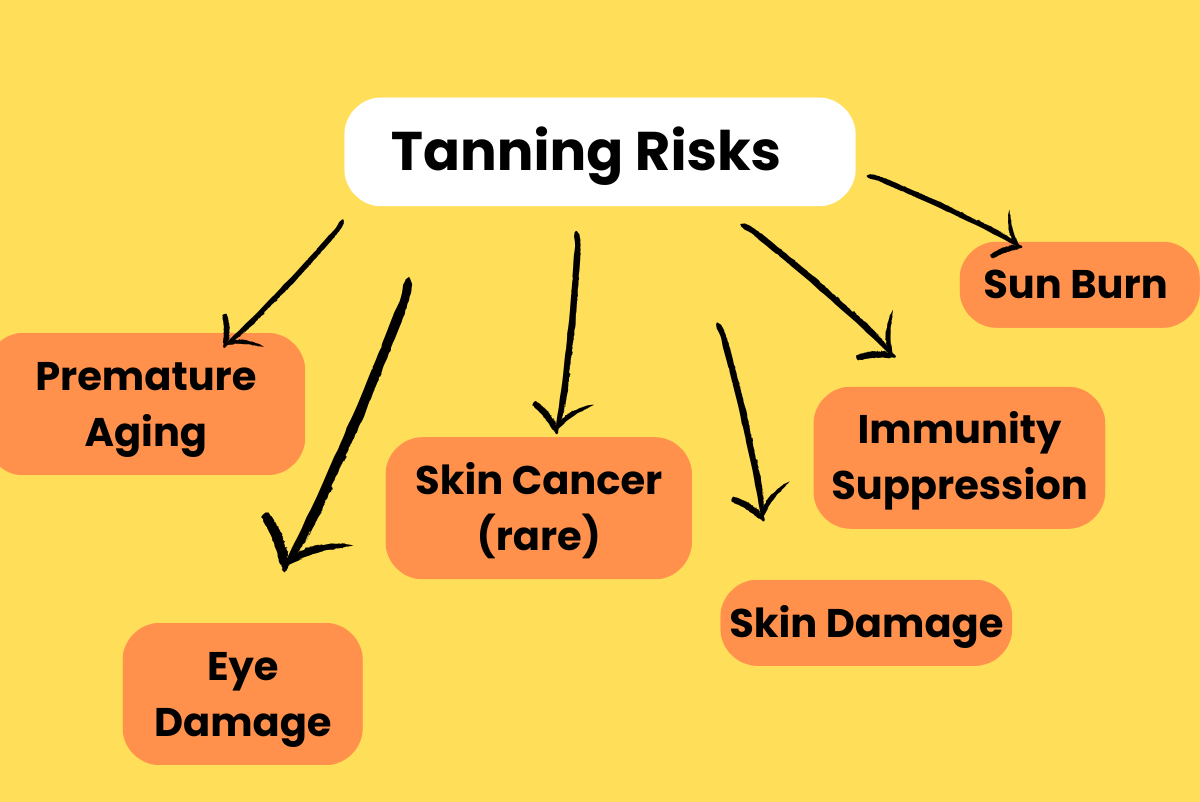
5 Health-related Risks Of Tanning
Skin Damages and Premature Aging
Direct exposure to too much UV radiation, such as in tanning, leads to skin damage and hastens the process of premature aging.
The penetrated UV radiation will break down collagen and elastin fibers in your skin, resulting in:
- Wrinkles
- Fine lines
- Sagging skin
Such exposure may further lead to dark spots (hyperpigmentation), which eventually results in uneven tone of the skin.
Increased Risk of Skin Cancer
Probably the greatest risk associated with tanning is the increased vulnerability to developing skin cancer. UV radiation induces changes in the DNA of cells that make up the skin and hence leads to mutations, ultimately forming skin cancer.
Melanoma has been linked to UV exposure from either tanning beds or by sun overexposure. UVR also has a role in basal-cell carcinoma and squamous cell carcinoma, the two major nonmelanoma skin cancers.
Sunburn
The more you tan, the greater the risk of sunburn, especially if you have a light or fair complexion.
Sunburn is an inflammatory reaction of skin tissues in response to a high dose of UV radiation. Symptoms include:
- Redness
- Pain
- Skin swelling
- Turning into blisters (in worst cases)
Eye Damage
UV radiation presents a danger to the eyes specifically in the initiation or promotion of cataracts and macular degeneration or photokeratitis.
This continued UV exposure without protecting one’s eyes is said to induce permanent damage to the eyes and eventually cause blindness a few years afterward.
Immune Suppression
Tanning UVs reduce the power of immuno-competency, making a body more prone to infections and often less able to fight back against diseases.
Generally, that diminishes health and well-being by lessening such natural defenses of the body against diseases.
Check Out This Video From the Mayo Clinic For More Details:
Mayo Clinic Minute: Tanning bed dangers
Surprising Facts About Indoor Tanning
- There’s no such thing as a safe tanning bed or sun lamp. Using tanning beds before reaching 20 can increase the chances of improving melanoma chances by 47%.
- Indoor tanning might make your skin age faster. This is why doctors recommend not to overuse it.
- Excessive use of tanning beds might cause skin burns, eye injuries, and several other complications.
Having a base tan won’t necessarily prevent sunburns. - It’s a myth that you would get sufficient vitamin D from only using tanning beds.
Sharing is Caring


Frequently Asked Questions
Can You Tan Without Damaging Your Skin?
Tanning is not possible without getting your skin damaged. Too much exposure to sunlight can increase the skin pigment and this causes your skin color to change. However, RLT sessions are much safer and don’t damage the skin much.
What Are The Benefits Of Tanning Once A Week?
There are several health benefits when it comes to tanning your skin once a week. You can notice:
- Improved appearance
- Increased in vitamin D levels
- Mood enhancement
That’s not all; the Indoor Tanning Association even states that consistent tanning (not overdoing) can help strengthen the lifespan.
Is Tanning Bad For You Even With Sunscreen?
No, it’s not bad. Wearing sunscreen can help you prevent the sun’s direct rays, which can later cause skin cancer and photoaging. However, it’s still quite possible that you may get a slight tan, despite wearing sunscreen.
How Likely Is It To Get Skin Cancer From A Tanning Bed?
There’s no certainty whether or not the usual tanning beds will cause cancer. However, good quality and recognized tanning beds can assure you of no danger whatsoever.

Leave a Reply